

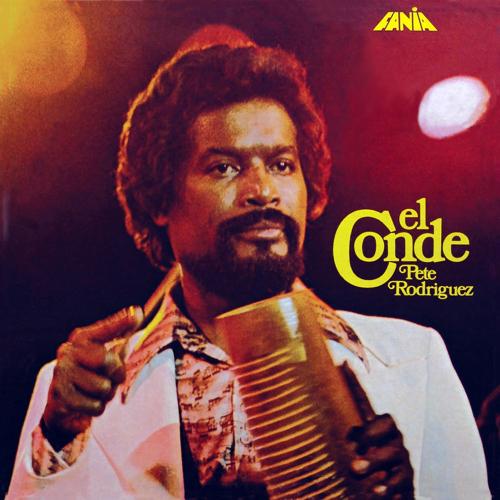
El Conde (Remastered 2026) Pete "El Conde" Rodríguez
Album info
Album-Release:
2026
HRA-Release:
30.01.2026
Album including Album cover
I`m sorry!
Dear HIGHRESAUDIO Visitor,
due to territorial constraints and also different releases dates in each country you currently can`t purchase this album. We are updating our release dates twice a week. So, please feel free to check from time-to-time, if the album is available for your country.
We suggest, that you bookmark the album and use our Short List function.
Thank you for your understanding and patience.
Yours sincerely, HIGHRESAUDIO
- 1 Los Compadres (Remastered 2026) 05:44
- 2 Blanca Paloma (Remastered 2026) 04:24
- 3 Perdón y Olvida (Remastered 2026) 04:03
- 4 Un Toque Pa' Yambao (Remastered 2026) 04:48
- 5 Soy Guajiro de Verdad (Remastered 2026) 04:50
- 6 Babaila (Remastered 2026) 05:34
- 7 El Conde Negro (Remastered 2026) 05:26
- 8 Fiesta en el Cielo (Remastered 2026) 04:27
- 9 Sombras que Pasó (Remastered 2026) 04:23
- 10 Lo Quiso Dios (Remastered 2026) 03:36
Info for El Conde (Remastered 2026)
His first solo recording after making his name as the sonero (improvisational singer) for Johnny Pacheco’s hot conjunto sound, Pete El Conde Rodríguez earned the title of Best New Band the following year in the Latin New York Magazine music poll. And with good reason, this one rocks from start to finish.
Fania was at its zenith in 1974 having performed in Zaire, Africa, for the Muhammad Ali/George Foreman Rumble in the Jungle boxing match concert. It was a Motown meets salsa showcase featuring the Fania All Stars alongside James Brown, Stevie Wonder and B.B. King.
As James Brown sang Say it loud, I’m black and I’m proud, Pedro Juan Rodríguez Ferrer (as he was christened in Ponce, Puerto Rico) personified African majesty blessed through musical skill. With themes of black pride, slavery and suffering, Pete’s smooth and elegant stage presence, smoky improvised vocal phrases, all executed while playing hand percussion and dancing, catapulted him to the top of the bandleader heap.
A saucy son montuno, “El Conde Negro” is Pete’s calling card where he paves his musical way as he identifies himself as the Black Duke. “Babaila” tells the tale of a young black boy while “Un Toque Pa’ Yambao” is a musical tribute to an enslaved African who knew how to defend his own.
Pete began learning how to defend his own the moment he got to New York. He played bongos when he was five years old in his father’s quartet. But after his father’s death, Pete was shipped to New York at 12 to begin his journey to manhood. Taken directly to 104th and First in East Harlem, he quickly learned the dividing line between the Italians from Pleasant to Third Avenue and the Blacks from Lenox to Seventh. After graduating high school, he was drafted and came face to face with raw racism while stationed as a paratrooper in the separated South. He clung to his Afro-Boricua identity as strongly as he remained in the camp to avoid the humiliation of segregated bathrooms, restaurants and stores.
“Babaila”, in particular, is sung with vocal and brass piercing passion. A hair-raising lament, “Babaila” tells the tale of a young child who’s separated from his family and sold at the slave market. Pete’s gypsy sounding chant, Yo no quiero morir en cadenas (I don’t want to die in chains) is a gut wrenchingly, tear welling song.
“Los Comprades” underscores the importance of the role of the god parent. Johnny Pacheco and Pete were compadres, if only through their musical prodigies, and in this recording you can hear Pacheco in the chorus. But neither arrangers or musicians were credited so it’s not clear if it’s Justo Betancourt or Adalberto Santiago on second voice or if it’s Charlie Rodriguez or Nelson Gonzalez on third .
Whoever is playing, the undulating montuno vamping and innovative tres solo on this tune ends in a Borincana theme, proving that three cups of Cuba and one pint of Puerto Rico were very much the mix of salsa de Nueva York.
Besides the dance music, the two boleros showcase the visceral congo sounding, smooth flavor of Pete El Conde that’s in pitch and on the mark.
The year before his death, I had the privilege of opening for Pete with a small bomba and plena folkloric group. He was not only happy that I was performing music again, but lamented that he had little opportunity to sing his native rhythms in a dance format, since, as he recounted, Fania was hot for the Afro-Cuban conjunto style popularized by Pacheco during the salsa era.
We hung out that night and talked about the Cuban and Puerto Rican masters who make up the rich fabric of this music. He told me his next project would feature those boricua beats, but fate took its turn and the Black Duke of Afro-Caribbean pride passed before closing the circle of his musical journey.
Pete "El Conde" Rodríguez, lead vocals
Johnny Pacheco, vocals, director
Adalberto Santiago, vocals
Raymond Castro, vocals
Roberto Torres, vocals
Digitally remastered
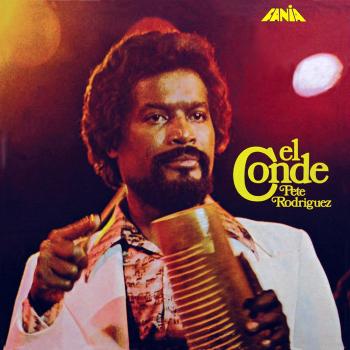
Pete “El Conde” Rodríguez
No wonder they called him “The Count” – Pete “El Conde” Rodríguez was one of the most gentlemanly singers that Afro-Caribbean music has ever known. True, he could be appropriately rough and gritty in the process of generating some serious salsa combustion, but he never lost his aristocratic demeanor in the process. With a perennial smile of contentment in his face, The Count was always in control of the swing.
Other salsa vocalists like Hector Lavoe and La Lupe were edgier and more idiosyncratic. El Conde was reliable to a fault. He never made a bad record.
Much like the Fania label itself, he found success by bridging together the worlds of Cuba and Puerto Rico. The son of a carpenter and amateur musician, he was a native of Ponce and spent the first years of his life in la Isla del Encanto (The Enchanted Island), until his mother shipped him to New York in search of better horizons.
His phrasing had the unique boricua flavor that distinguishes every Puerto Rican singer from Ismael Rivera to Cheo Feliciano. But El Conde found success by embracing the raw vocal style of quintessential Cuban crooners like Beny Moré and Miguelito Cuní, while favoring material that paid reverential tribute to the sweet afro-pop confections of La Sonora Matancera.
El Conde’s career will be forever associated with another tropical legend, Dominican bandleader and Fania co-founder Johnny Pacheco. It was Pacheco – who spotted El Conde singing with pianist Johnny Soler at local club Los Panchos – who invited him to become part of his band.
Rodríguez began his collaboration with Pacheco on the 1963 release Suavito for the Alegre label. Most importantly, he was the lead vocalist on the 1964 LP Cañonazo, the first release on the Fania label and the session that marked Pacheco’s momentous transition from the innocence of Cuban charanga to the traditional conjunto format à la Sonora Matancera. Pacheco, who has worked with renowned singers such as Celia Cruz, Rolando Laserie and Héctor Casanova, has always stated that El Conde was his favorite singer.
We begin our anthology of Pete ‘El Conde’ Rodríguez highlights with “Alto Songo,” an old fashioned hit single from the 1964 album Pacheco At The New York World’s Fair. Notice the understated elegance in the sonero’s delivery, as well as the catchy chorus of this musty Cuban standard.
“La Esencia del Guaguancó” is a huge leap forward in terms of swing and the tightness of the arrangement. El Conde adds fuel to the fire; his timing is implacable here, and the composition (an original gem by Puerto Rican songwriter Tite Curet Alonso) leads us into a salsa dancer’s paradise. El Conde continued performing extended versions of this song in his concerts until his death.
Another massive hit from the duo, “Dulce Con Dulce” includes sharp touches of bongo, a swirling trumpet melody and a devastating chorus. It is culled from the 1971 session Los Compadres, the record whose title and hilarious cover photo generated the compadres (“partners”) mystique, portraying Pacheco and his lead singer as best friends and musical partners for life.
The hypnotic “Primoroso Cantar” is from the 1973 session Tres De Café Y Dos De Azúcar, considered by many as the very best of the duo’s many collaborations.
Following a trend that has become a cliché with popular salsa bands, El Conde felt the urge to leave the safety of Pacheco’s combo and embark on a solo career. Surprisingly, the split was anything but acrimonious, and Pacheco is actually the musical director on El Conde, the singer’s 1974 solo debut. The album includes strong numbers such as the autobiographical “El Conde Negro” and “Fiesta En El Cielo,” a wonderful example of the crooner’s majestic touch when it came to interpreting smoldering boleros.
From that moment on, El Conde would alternate his blossoming solo career with the occasional reunion record with Pacheco. It is hard to distinguish between both, since his solo output followed, for the most part, the rootsy conjunto revival championed by Pacheco.
El Conde would experience his biggest commercial success in 1976 with the seminal LP Este Negro Sí Es Sabroso. Boosted by a tight band and brilliant Tite Curet Alonso compositions, the record is seamless from start to finish. The opening track “Catalina La O” is to this day one of the hits that defined the very essence of the ’70s salsa explosion. Also from that session, “Pueblo Latino” delivers a moving call for unity among Latinos: a sociopolitical message in the guise of a hypnotic groove.
Even though he enjoyed the riches and fame of an acclaimed salsero, El Conde’s early life was seeped in sadness: the death of his father when he was still a child; the racism that surrounded him during most of his youth; and a painful struggle to establish himself as a respected musician. This may explain why so much of the singer’s repertoire is melancholy by nature.
Culled from the 1979 Soy La Ley album, “Recuerdos De La Escuela” is a bittersweet tune whose upbeat cowbell beat contrasts the nostalgic lyrics about returning to his hometown and wondering whatever happened to his old classmates. Richly layered and deceptively complex, it is one of the standout tunes from El Conde’s later albums.
Our journey comes to an epic conclusion with a particularly lush number recorded with Celia Cruz for the 1980 Fania All Stars session Commitment. “Encántigo” has the gritty vocalizing that one would expect from a duet involving these two soneros. But it also boasts a near-baroque string arrangement characteristic of the over-the-top productions that Fania recorded in the late ’70s. The clash between authentic rumba beats and orchestral grandeur is particularly satisfying.
Pete “El Conde” Rodríguez died in his sleep on December 1, 2000. He had remained active until the very end, recording a track for Tito Puente’s last album (Masterpiece, the timbalero’s collaboration with keyboardist Eddie Palmieri) and doing the occasional live performance with various lineups of the Fania All Stars. To this day, his unassuming demeanor and fiery soneos are sorely missed. (Written by Ernesto Lechner)
This album contains no booklet.