






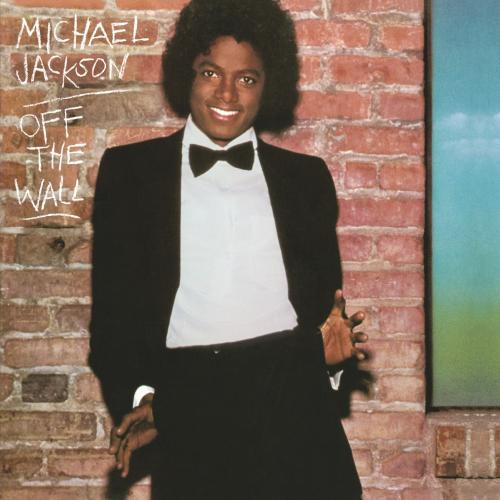
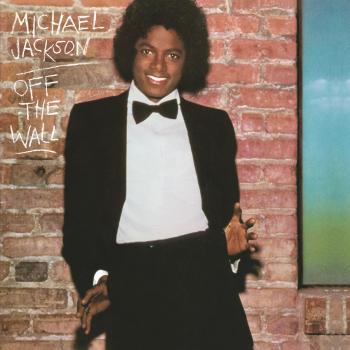
Off the Wall (Remastered) Michael Jackson
Album info
Album-Release:
1979
HRA-Release:
04.03.2026
Album including Album cover
I`m sorry!
Dear HIGHRESAUDIO Visitor,
due to territorial constraints and also different releases dates in each country you currently can`t purchase this album. We are updating our release dates twice a week. So, please feel free to check from time-to-time, if the album is available for your country.
We suggest, that you bookmark the album and use our Short List function.
Thank you for your understanding and patience.
Yours sincerely, HIGHRESAUDIO
- 1 Don't Stop 'Til You Get Enough (Remastered) 05:52
- 2 Rock with You (Single Version) (Remastered) 03:23
- 3 Workin' Day and Night (Remastered) 05:12
- 4 Get on the Floor (Remastered) 04:38
- 5 Off the Wall (Remastered) 03:49
- 6 Girlfriend (Remastered) 03:04
- 7 She's Out of My Life (Remastered) 03:38
- 8 I Can't Help It (Remastered) 04:27
- 9 It's the Falling in Love (Remastered) 03:46
- 10 Burn This Disco Out (Remastered) 03:40
Info for Off the Wall (Remastered)
Off the Wall is the fifth studio album by the American singer Michael Jackson, released on August 10, 1979, by Epic Records. It was Jackson's first album released through Epic Records, and the first produced by Quincy Jones, whom he previously collaborated with while working on the 1978 film The Wiz. Off the Wall was crafted from disco, pop, funk, R&B, soft rock and Broadway ballads. Its lyrical themes include escapism, liberty, hedonism and romance. The album features songwriting contributions from Stevie Wonder, Paul McCartney, Rod Temperton, Tom Bahler, and David Foster, alongside three tracks penned by Jackson himself.
The importance of Michael Jackson's Off the Wall cannot be overstated. Recorded when he was just 20 years old, the album heralded Michael's stunning emancipation as a singular musical force and creative visionary. It smashed the ceiling on record sales for black artists, ushering in an exciting new era of R&B-to-pop crossover airplay, chart, marketing and sales trends not seen before in modern pop music. It's the record that "invented modern pop as we know it," wrote Rolling Stone. For fellow black artists of the day, Michael served as an illuminating inspiration.
To Black America, Off The Wall transcended music and entertainment altogether. The success of the album marked a level of national and international achievement that conjured pride in a culture that as late as the end of the 1970s was still fighting for the kind of social acceptance that Michael's album received. Because of Off the Wall's indelible influence, 21st century artists as disparate as Beyonce, Pharrell, Kendrick Lamar and The Weeknd all have a blueprint they turned to for creating their superstardom.
Written by Michael Jackson, the first single from Off The Wall, "Don't Stop 'Til You Get Enough", was Michael's first Grammy and first single to hit #1 in the U.S. and internationally as a solo artist. With the singles "Rock With You", "Off the Wall" and "She's Out of My Life" Jackson became the first solo artist in history to have four singles from the same album peak inside the top 10 of the Billboard Hot 100. The album was an enormous commercial success; as of 2014 it is certified eight times platinum in the United States and has sold more than 30 million copies worldwide, making it one of the best-selling albums of all time.
Michael Jackson
Digitally remastered
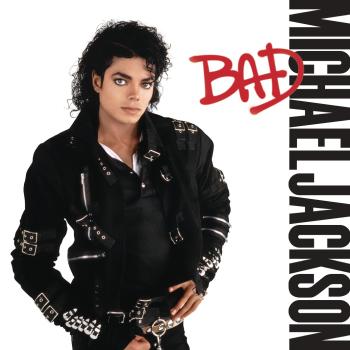

Michael Jackson
born August 29, 1958 in Gary, Indiana, spent nearly his entire life as a public performer. At age four he was singing with the family group; a charismatic bundle of energy who was musically wise beyond his years, he soon became their lead vocalist and front man. Onstage, using every ounce of his old-school training, he modeled his dance moves and singing on James Brown and Jackie Wilson, and portrayed a self-confidence that belied his shy, private personality.
The Jackson Five-Michael, Jermaine, Jackie, Marlon and Tito-signed to Motown Records at the end of 1968, and were immediately groomed for stardom: “They’ll have three No. 1 records in a row,” Motown founder Berry Gordy famously announced before any records were released. In fall 1969 they exploded with “I Want You Back,” one of the greatest singles in pop history, and it was the first of four consecutive no. 1 pop hits, as “ABC,” “The Love You Save” and “I’ll Be There” followed. Flip sides such as “Who’s Lovin’ You,” a knockout performance by Michael with all the hallmarks of a great soul artist, illustrated his remarkable maturity.
It seemed inevitable that young MJ would spin off as a solo artist. The aching ballad “Got To Be There” was his first solo single, released October 7, 1971, and it shot to no. 4 on both the pop and R&B charts. His debut solo album Got To Be There was released in January 1972 and reached the pop Top 20. The LP also spun off “Rockin’ Robin,” a cover of a fifties smash that hit no. 2 pop and R&B, and “I Wanna Be Where You Are” (top 20 pop/no. 2 R&B).
In July 1972 Michael sang “Ben,” the title song from a movie about a trained rat, and it became his first solo pop no. 1. Michael’s emotional, sincere performance helped the song win a Golden Globe Award, and it was nominated for an Oscar®. The stylistically rich Ben album showcased Michael’s interpretive skills: the tracks included a moody cover of the Stylistics’ moody “People Make The World Go Round,” which in later years became a favorite of hip-hoppers; the happy, funky “We’ve Got A Good Thing Going;” and a nod to the great jazz singer Jimmy Scott, a man-child of another era, with a cover of Scott’s signature song “Everybody’s Somebody’s Fool.”
MJ was still only 14 years old.
Music & Me, released April 13, 1973, was Michael’s next album-a push towards more adult contemporary pop like “Ben,” which backfired commercially, although it contains fine performances, including “With A Child’s Heart,” originally cut by Stevie Wonder, Motown’s sixties teen superstar, and a vocal version of “Happy,” the love theme from Lady Sings The Blues, the Gordy-produced film on the life of Billie Holiday released the previous that starred Jackson mentor Diana Ross.
Forever, Michael, released in January 1975, got things back on the R&B track. A more danced-oriented project that featured the return of Brian and Edward Holland to Motown, the LP hit the Black Album chart top 10, while its tracks “We’re Almost There” and “Just A Little Bit Of You” both peaked inside the R&B Singles top 10. In the two years prior, the Jackson 5, after a commercial lull, had been successful with dance tracks, particularly the smash no. 1 “Dancing Machine.”
Those four albums might have been the end of the story for Michael and Motown, as he and the group, sans Jermaine, left to go to Epic Records. Michael was 17 years old. While the group-now the Jacksons-kept the groove going, MJ set aside his solo career. He took up acting, memorably appearing as the Scarecrow in The Wiz with Diana Ross in 1978. He struck up a friendship with the film’s music producer, Quincy Jones and, in 1979, at age 21, MJ re-ignited his solo career, collaborating with Jones on Off The Wall. In the aftermath of its huge success, Motown issued the compilation One Day In Your Life, on March 25, 1981. Its title song-lifted from Forever, Michael-turned into a no. 1 hit in the U.K. and top 40 AC in the U.S.
Then came Thriller. The hits. The videos. The moonwalk on Motown 25. In May 1984 Motown released the LP Farewell My Summer Love, a batch of songs from the vault with contemporary overdubs; the title song went top 10 R&B. Two years later Motown issued Looking Back To Yesterday, a collection of more vault masters-some with the J5-that contained further unexpected gems.
Michael and his brothers were inducted into the Rock and Roll Hall of Fame in 1997. Michael went in as a solo artist in 2001. “He has transfixed the world like few entertainers before or since,” it says in his inductee biography. “As a solo performer, he has enjoyed a level of superstardom previously known only to Elvis Presley, the Beatles and Frank Sinatra.”
It was at Motown where MJ first bared his young soul and was set on his path to becoming the biggest pop star of our time. He died at age 50, much too young, on June 25, 2009. He is loved, he is missed. He is Forever, Michael. (Source: Universal Music)
This album contains no booklet.