


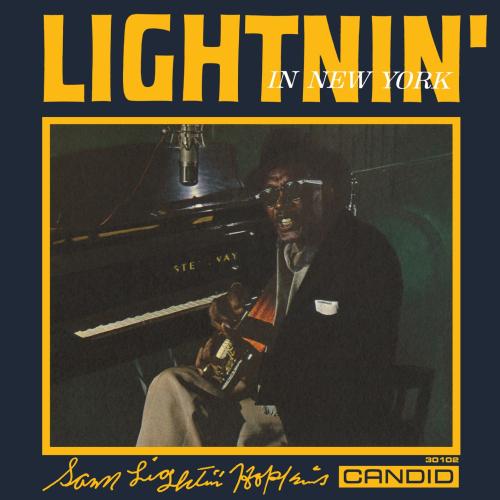
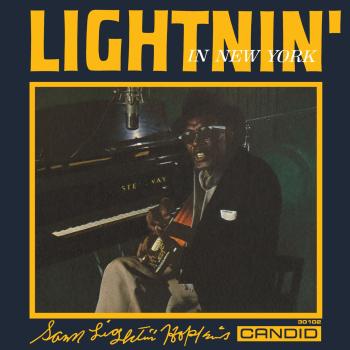
Lightnin' In New York (Remastered) Lightnin' Hopkins
Album info
Album-Release:
1961
HRA-Release:
05.03.2026
Album including Album cover
- 1 Take It Easy (Remastered) 06:20
- 2 Mighty Crazy (Remastered) 07:08
- 3 Your Own Fault, Baby, To Treat Me The Way You Do (Remastered) 04:47
- 4 I've Had My Fun, If I Don't Get Well No More (Remastered) 03:57
- 5 The Trouble Blues (Remastered) 04:44
- 6 Lightnin's Piano Boogie (Remastered) 02:32
- 7 Wonder Why (Remastered) 06:16
- 8 Mister Charlie (Remastered) 07:30
Info for Lightnin' In New York (Remastered)
Recorded on November 15, 1960 at Nola Penthouse Sound Studios in New York, Lightnin' In New York features the legendary bluesman in classic form, including some rare solos on piano.
Produced by Candid Records label co-founder, famed music critic and social activist Nat Hentoff, and recorded at a time when Hopkins was being rediscovered by a white audience, the Bluesman reluctantly accepted his new role as a performer before a predominantly white audience.
"This solo album features the classic bluesman Lightnin' Hopkins on eight unaccompanied solos, not only singing and playing guitar but taking some rare solos on piano (including on 'Lightnin's Piano Boogie'). Hopkins recorded a lot of albums in the 1960s and all are quite listenable even if most are not essential; he did tend to ramble at times! This Candid release is one of his better sets of the period".[4] The Penguin Guide to Blues Recordings wrote: "Thanks to the engineer Bob d'Orleans, Lightnin' in New York sounds wonderful, and Lightnin' seems to feel specially at ease, essaying experiments that he seldom or never repeated". (Scott Yanow, AMG)
Lightnin' Hopkins, vocals, guitar, piano
Recorded November 15, 1960 at Nola Penthouse Sound Studios, NYC
Engineered by Bob d’Orleans
Digitally remastered
Please Note: we do not offer the 192kHz version of this album, because our analysis clearly showed, that the 192kHz does not reach a frequency spectrum, that would justify to offer 192kHz. Hence we offer the 96kHz version.
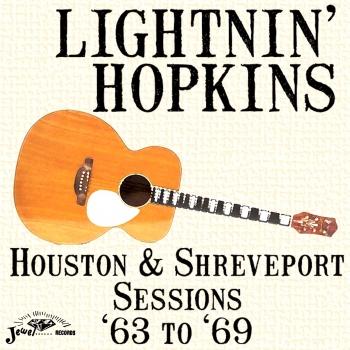
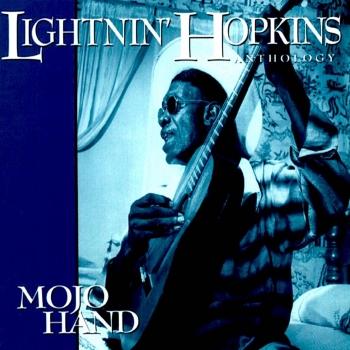
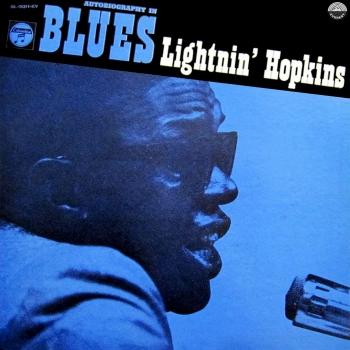
Sam Lightnin' Hopkins
Born in Centerville, Texas, Hopkins learned the blues when young in Buffalo, Texas from Blind Lemon Jefferson and his older cousin, country-blues singer Alger 'Texas' Alexander. When Hopkins and Alexander were playing in Houston in 1946, he was discovered by Lola Anne Cullum of Los Angeles', Aladdin Records (although Alexander would not make it out to L.A.) Hopkins' fast finger style is very distinct.
He settled in Houston in 1952 and gained much attention. Solid recordings followed including his masterpiece song Mojo Hand in 1960.
His style was born from spending many hours playing informally without a backing band. His distinctive style often included playing, in effect, bass, rhythm, lead, percussion, and vocals, all at the same time. His musical phrasing would often include a long low note at the beginning, the rhythm played in the middle range, then the lead in the high range. By playing this quickly - with occasional slaps of the guitar - the effect of bass, rhythm, percussion and lead would be created.
In 1968 Hopkins recorded the album Free Form Patterns backed by psychedelic rock band the 13th Floor Elevators.
Hopkins was a great influence on many local musicians around Houston and Austin, Texas in the 1950s and 1960s. He was an influence on Jimmie Vaughan's work and, more significantly, on the vocals and blues style of Ron "Pigpen" McKernan, the keyboardist of the Grateful Dead until 1972. He was also an important influence on Townes Van Zandt, the Texan folk/blues songwriter and performer, who often performed Hopkins numbers in his live performances. Doyle Bramhall II is another Texas artist who was influenced by Hopkins, as evidenced by a tattoo of Lightning on his upper left arm. Jimi Hendrix reportedly became interested in blues music listening to Lightnin' Hopkins records with his father.
A song named after him was recorded by R.E.M. on their album Document.
The Houston Chronicle included Hopkins in their list of "100 Tall Texans", 100 important Texans that influenced the world. The George Bush Presidential Library and Museum included Hopkins in a 100 Tall Texans exhibit that opened in September 2006. The display includes Lightnin's Guild Starfire electric guitar and performance video.
Hopkins' Gibson J-160e guitar is on display at the Rock n' Roll Hall of Fame in Cleveland, Ohio. Sam "Lightnin'" Hopkins (March 15, 1912 – January 30, 1982).
This album contains no booklet.