



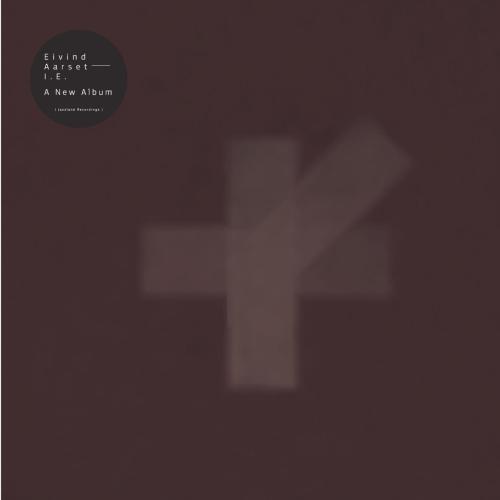
I.E. Eivind Aarset
Album info
Album-Release:
2015
HRA-Release:
15.09.2015
Label: Jazzland Recordings
Genre: Jazz
Subgenre: Modern Jazz
Artist: Eivind Aarset
Composer: Eivind Aarset
Album including Album cover
I`m sorry!
Dear HIGHRESAUDIO Visitor,
due to territorial constraints and also different releases dates in each country you currently can`t purchase this album. We are updating our release dates twice a week. So, please feel free to check from time-to-time, if the album is available for your country.
We suggest, that you bookmark the album and use our Short List function.
Thank you for your understanding and patience.
Yours sincerely, HIGHRESAUDIO
- 1 Rask 05:51
- 2 Sakte 07:48
- 3 Wanderlust 12:32
- 4 Hidden/Feral 09:33
- 5 One and the Same 08:53
- 6 They'll Be Asked Nothing 07:22
- 7 Through Clogged Streets, Passed Rotten Buildings... 12:13
- 8 One and the Same Again 03:07
- 9 Return to Her Home 02:58
Info for I.E.
Eivind Aarset is a musician who has succeeded in the difficult task of creating an immediately identifiable sound and marrying it to a will to investigate as many musical possibilities as he can find or imagine. I.E. is his latest and arguably most accomplished album embodying these traits.
The nine tracks that comprise the album are often diptychs or triptychs, structured with clear movements, shifting in tone, colour and mood. Some are divided and set as way markers. And none of this is new to Aarset, yet never has it been so clearly defined.
Aarset's soundworld has always been one that could be mapped by those willing to explore it (and there are many who have, with a near-obsessive enthusiasm). Where 'Dream Logic' was something of an unexpected side-step out of the kind of sound Aarset fans had grown accustomed to, this album is equally so, yet – as usual – feels organically connected to everything he has done.
All the nuances, textures, gestures and signs that appeared on the aforementioned 'Dream Logic' remain intact here, but now nestle amid beds of the 'traditional' Aarset band sound. This fusion creates a completely new set of surprises, not only in terms of their juxtaposition, but also in terms of their sheer audacity. The result is an album that features a greater variety of sonics than any Aarset has so far released and a greater will to explore his self-creating world even further than before.
The album's recording methods and locations have been varied in numerous ways, but the majority of the album was recorded live in the studio with the basic quartet (Aarset, Erlien, Holt, Dahlen), then receiving additional overdubs (mainly from Aarset and the brass section, this latter having its arrangements created after the initial recordings). The effect upon the sound is energising, allowing a rawness to remain untouched. This decision was one that was not made based upon some whimsical fleeting notion, but rather was a well-informed choice: the groups' performances have steadily evolved a cohesiveness that can only come from extremely compatible musicians developing a full understanding and empathy with each other's playing. Aarset's Sonic Codex Quartet have ably demonstrated over and over again that they are capable of producing music that sounds equal in scale to a big band. Yet, because they are only a quartet, they are equally capable of branching the music in entirely new directions in a truly fearless and experimental manner. The addition of I.E. to their repertoire options should open entirely new ground for them to explore, giving new fans something to shout about and presenting old fans with a brand new experience they won't want to miss.
Aarset's Sonic Codex Orchestra is an organism capable of transformation, camouflage, symbiosis, and adaptation within any musical environment. It is truly multifaceted, and whether careering along a riff like an open-throttle diesel engine or gliding along gentle air currents through an ambient sky, the personality of every musician finds a place to make its mark. Of particular note are Audun Erlien's keyboard work (something for which he rarely receives enough credit, overshadowed as it is by his marvellous double-jointed grooving bass work), Wetle Holt, and Erland Dahlen's menagerie of struck instruments, particularly the dulcimers and glockenspiels that create many highlight moments here. The appearance of the full brass section, the sampling genius of Jan Bang, and the vocal stylings, hyper-elastic acrobatics and pyrotechnics of Lorenzo Esposito Fornasari, also enrich the sound deeply, creating an utterly new dimension for Aarset's sound.
Aarset's guitar remains the dominant force throughout, but never overpowers the music as a whole. His endless skill in finding the right notes to play, whether in a sparse ambient environment or a chaotic crescendo of polyphonic revelry, is a marvel to behold. I.E. marks yet another move upward in Aarset's ascent towards the summit of his powers: long may he climb!
Eivind Aarset, guitar
Audun Erlien, bass
Wette Holte, drums
Erland Zahlen, drums, percussion
Eivind Aarset
is a guitarist with a unique musical vision that absorbs and reflects all manner of music while retaining an enviable individualism and high quality craftsmanship that can span from quiet intimacy to searing intensity. His debut as a bandleader on Jazzland Recordings was described by the New York Times as "One of the best post-Miles electric jazz albums," setting a high benchmark that Aarset has consistently met and exceeded, both in the studio and in live performance.
As one of Norway's most in-demand guitarists, Eivind Aarset has worked with Jon Hassell, David Sylvian, Bill Laswell, Jan Garbarek, Paolo Fresu, Marilyn Mazur, J.Peter Schwalm, Mike Manieri, Marc Ducret, Michel Benitas Ethics, Martux-M, Stefano Battaglia, Michele Rabbia, Talvin Singh, and Andy Sheppard. He has worked with Nils Petter Molvaer's band, (appearing on all of Molvaer's albums, including the breakthrough album "Khmer" and 2006's award-winning "ER"). He also has collaborated with Dhafer Youssef, both live and in the studio.
Aarset's musical awakening happened when, at the age of 12, he heard Jimi Hendrix. "I started on the guitar as soon as I heard him," he recalls with a smile. "I bought a second hand Hendrix record and that was it. Then I started getting into rock bands like Deep Purple, Black Sabbath, Santana and Pink Floyd before my brother introduced me to the music of Miles Davis, the Mahavishnu Orchestra, Weather Report and Return to Forever. After a while, I got into the ECM sound of Jan Garbarek, and Terje Rypdal, who was a big influence. Then I went on the road with a fulltime heavy metal band, a fantastic experience, until I got tired of being angry every night! Then I quit and became a session musician."
As part of the band, Ab & Zu, he created the unique guitar style and sound he would later develop further as part of saxophonist Bendik Hofseth's group. However, it was his involvement with Bugge Wesseltoft and the Oslo Jazz underground that crystallized the sound he was seeking: "What drew me to this music was the hypnotic grooves and musical freedom I found," says Eivind. "There's no established rules or tradition in what I am doing, you can make the rules up as you go along. Rhythm is the centre of the music, the landscape the soloist travels through. It's fresh territory and I have no idea where this scene will end up, but there's a lot of great sounds and new music being created which makes it such an exciting scene."
This album contains no booklet.