









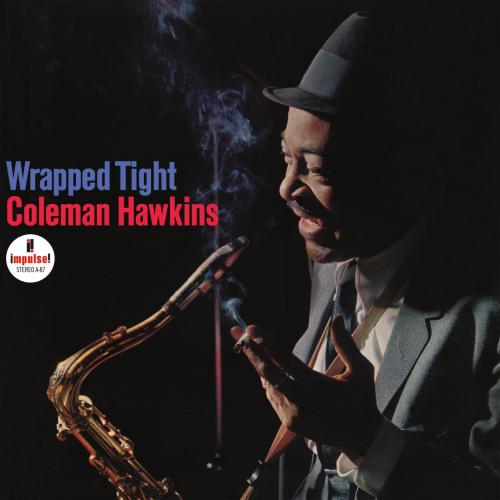
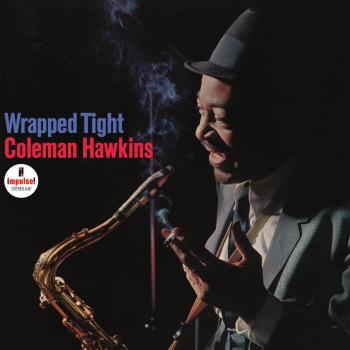
Wrapped Tight (Remastered) Coleman Hawkins
Album info
Album-Release:
1965
HRA-Release:
27.11.2026
Album including Album cover
I`m sorry!
Dear HIGHRESAUDIO Visitor,
due to territorial constraints and also different releases dates in each country you currently can`t purchase this album. We are updating our release dates twice a week. So, please feel free to check from time-to-time, if the album is available for your country.
We suggest, that you bookmark the album and use our Short List function.
Thank you for your understanding and patience.
Yours sincerely, HIGHRESAUDIO
- 1 Wrapped Tight (Remastered) 03:30
- 2 Intermezzo (Remastered) 03:37
- 3 Out Of Nowhere (Remastered) 03:44
- 4 Indian Summer (Remastered) 05:03
- 5 Red Roses For A Blue Lady (Remastered) 02:25
- 6 Marcheta (Remastered) 03:06
- 7 Beautiful Girl (Remastered) 04:28
- 8 She's Fit (Remastered) 02:45
- 9 And I Still Love You (Remastered) 03:14
- 10 Bean's Place (Remastered) 02:57
Info for Wrapped Tight (Remastered)
Originally released on Impulse! in 1965, Wrapped Tight arrived late in Coleman Hawkins’ influential career and was the final album released under his name as a bandleader during his lifetime. Produced by Bob Thiele, the album found the tenor saxophonist continuing to evolve decades after first emerging as one of the instrument’s most important innovators.
The record’s selections span standards, vintage film music, and Hawkins’ own compositions. Among them is “Intermezzo,” written by Heinz Provost and used in the 1936 Swedish film of the same name as well as its 1939 American remake. Hawkins also takes on standards including “Red Roses for a Blue Lady” (released in 1948 by Sid Tepper and Roy C. Bennet) and “I Won’t Dance” (composed by Jerome Kern in 1935), while contributing his original composition “She’s Fit.”
Wrapped Tight arrived more than four decades into Hawkins’ recording career. Nicknamed “Hawk,” the musician helped establish the tenor saxophone as a major voice in jazz, beginning during the swing era and continuing through the emergence of bebop and modern jazz. His influence extended to generations of saxophonists who followed him. Miles Davis once said of Hawkins, “When I heard Hawk, I learned to play ballads.”
Coleman Hawkins, tenor saxophone
Bill Berry, trumpet (tracks 1–3 & 7–8)
Snooky Young, trumpet (tracks 4–6)
Urbie Green, trombone
Barry Harris, piano
Buddy Catlett, double bass
Eddie Locke, drums
Recorded February 22 and March 1, 1965 at Van Gelder Studios, Englewood Cliffs, New Jersey
Produced by Bob Thiele
Digitally remastered

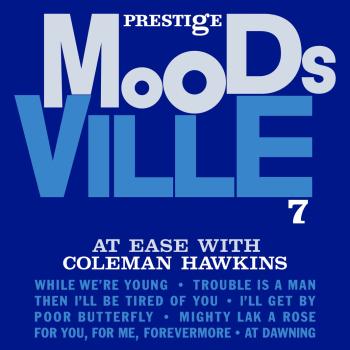
Coleman Hawkins
was born in St. Joseph Missouri in 1904. He attended High School in Topeka Kansas, and subsequently had two years of college music education at Washburn College. Shortly after this period, he would relocate to New York City, where he would begin a long and prosperous tenure with Fletcher Henderson’s Orchestra. He would come in contact with Louis Armstrong during this time, and it would have an incredible impact on Hawkins. He would later go on to tour extensively in Europe before returning to America for another long stretch. Coleman Hawkins is thought of as the first person to bring the tenor saxophone to prominence in jazz music. There were players before him, but he is often credited as being the first to demand that the instrument be taken seriously. His virtuosic approach to improvisation, often consisting of advanced harmonies and arpeggios, was among the first styles to be tailored precisely to the tenor sax. Coleman Hawkins would also go on to be a pioneer of the bebop style, associating with musicians like Dizzy Gillespie, Thelonious Monk, Max Roach, Sonny Rollins, Charlie Parker and others.
This album contains no booklet.