



[].
Trio Ernest & Éléonore Billy
Biography Trio Ernest & Éléonore Billy
Eleonore Billy
Nachdem sie sowohl mündlich als auch durch ein Konservatoriumsstudium Violine gelernt hatte, wandte sie sich der Nyckelharpa und der skandinavischen Musik zu. Damit ist sie die erste französische Musikerin, die in Schweden ausgebildet wird – einem Land, dessen Sprache und Kultur sie sich zu eigen machen wird.
Seit ihrer Kindheit von traditioneller, klassischer und barocker Musik inspiriert, führt sie ihre Neugier in neue Klangwelten und kreative Gefilde sowie zu musikalischen Kooperationen mit unterschiedlichsten Künstlern, in Frankreich und im Ausland.
Neben Octantrion tritt Éléonore Billy in verschiedenen von ihr gegründeten Formationen auf, darunter ihr Streichquartett Quarlätt und das Musical „Le Merveilleux voyage de Nils Holgersson“ für junges Publikum. Sie leitet das „Tokso Folk String Quartet“, in dem sie auch als Komponistin und Musikerin tätig ist und das auf europäischen Bühnen tourt. Darüber hinaus wirkt sie an weiteren faszinierenden Projekten wie Barrocka (neu interpretierte italienische Barockmusik) oder EMMA (einem improvisierten und minimalistischen Jazzquartett) mit.
Neben Octantrion tritt Éléonore Billy in verschiedenen von ihr gegründeten Ensembles auf, wie beispielsweise in ihrem Streichquartett Quarlätt oder dem Musical „Le Merveilleux voyage de Nils Holgersson“ für junges Publikum. Sie ist außerdem Co-Leiterin, Komponistin und Musikerin des „Tokso Folk String Quartet“, das auf europäischen Bühnen tourt, und begleitet andere faszinierende Projekte wie Barrocka (neu interpretierte italienische Barockmusik) oder EMMA (ein improvisiertes und minimalistisches Jazzquartett).
Trio Ernest
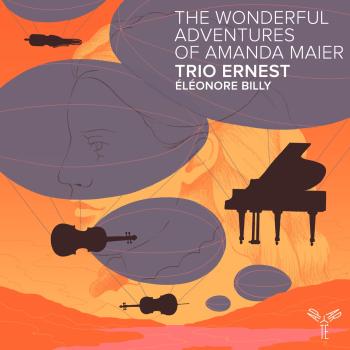
Das 2019 in Genf gegründete französisch-schweizerische Ensemble Trio Ernest hat sich dank seiner einzigartigen Persönlichkeit und seiner modernen und engagierten Herangehensweise an die klassische Musik auf der internationalen Bühne etabliert. Seine erste CD, Haydn All-Stars (Aparté), wurde von der Kritik einhellig gelobt und unter anderem mit einem Editor’s Choice von Gramophone, einer Trophée Radio Classique und 5 Diapasons ausgezeichnet. Das Jahr 2026 beginnt mit der Veröffentlichung eines neuen Albums, The Wonderful Adventures of Amanda Maier. In Zusammenarbeit mit der Nyckelharpistin Eléonore Billy bringt das Trio romantische und traditionelle Musik zusammen, um eine der großen Genies des 19. Jahrhunderts (wieder) zu entdecken: die Schwedin Amanda Maier.
Diese starke Identität öffnet ihnen die Türen zu den großen internationalen Bühnen, von der Victoria Hall in Genf bis zum Shanghai Oriental Art Center, der Salle Cortot in Paris, dem Bozar in Brüssel, dem Schoenberg Center in Wien oder der Franz Liszt Academy in Budapest. Sie sind auch Gäste bei renommierten Festivals wie dem Flanders Festival Ghent, dem Swiss Chamber Music Festival oder dem Ravel-Festival. Man kann sie regelmäßig auf France Musique, der BBC, RTS oder Radio Classique hören. Sie arbeiten mit Künstlern wie Ophelia Gaillard, Stephan MacLeod, Gabriel Pidoux, Vassilena Serafimova, dem Orchestre de l’Opéra de Rouen, dem Orchestre des Pays de Savoie und dem Orchestre Juventutti sowie mit der Schauspielerin Dominique Reymond zusammen und sind sehr interessiert an neuen Begegnungen. Das Trio übernimmt seit 2021 die künstlerische Leitung der Saison Bee Classical ! in Genf, wo er sein künstlerisches Universum frei entfalten kann.
Die drei Musiker, die sich besonders für die Verteidigung der Komponistinnen von gestern und heute einsetzen, sind–ne–s programmieren für jedes ihrer Konzerte ein Stück, das von einer Frau komponiert wurde. Im Zuge dessen erhielten sie den Christian Zeller Award für ihre Interpretation des Trio von Maier und nehmen an La Boîte à Pépites teil. Da sie zur Dynamik ihres Repertoires beitragen wollten, gründeten sie das Trio von Carlos Roque Alsina und sind für viele Arrangements für ihre Formation verantwortlich. Außerdem sind sie umweltbewusst und reisen innerhalb Europas ohne Flugzeug, um die Auswirkungen ihres Berufs auf das Klima zu begrenzen. Auf diese Weise setzt sich das Trio auf seine Weise für eine zwar klassische, aber vor allem lebendige Musik ein, die mit den Herausforderungen des 21. Jahrhunderts verbunden ist.
Er ist Resident der European Chamber Music Academy und hat zahlreiche internationale Preise gewonnen, darunter den Prix Pro Musicis (Paris), den ersten Preis des Verao Classico Chamber Music Award (Lissabon), den Orpheus-Wettbewerb (Zürich) oder den Chamber Music Award des ISA-Festivals (Wien). Das Trio ist Preisträger der Académie Villecroze und hat einen Masterabschluss von der Hochschule der Künste Bern in der Klasse von Patrick Jüdt. Als ehemaliger Resident der Chapelle Musicale Reine Elisabeth und des ProQuartetts bildet er sich derzeit bei Mathieu Herzog weiter.
Dank der großzügigen Unterstützung der Boubo-Music Foundation (Schweiz) spielt Stanislas Gosset eine Violine von Francesco Goffriller, die um 1735 in Venedig hergestellt wurde, und Clément Dami ein Cello von Giacinto Santagiuliana, das um 1850 in Vincenza hergestellt wurde.
Ohne die Genehmigung des Ernest Trios dürfen keine Änderungen an dieser Biografie vorgenommen werden.