





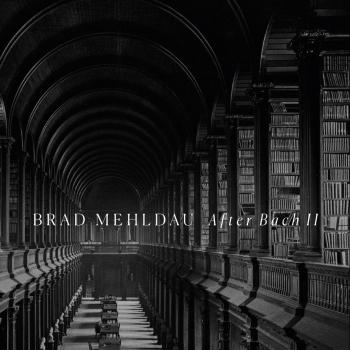
After Bach II Brad Mehldau
Album info
Album-Release:
2024
HRA-Release:
10.05.2024
Album including Album cover
I`m sorry!
Dear HIGHRESAUDIO Visitor,
due to territorial constraints and also different releases dates in each country you currently can`t purchase this album. We are updating our release dates twice a week. So, please feel free to check from time-to-time, if the album is available for your country.
We suggest, that you bookmark the album and use our Short List function.
Thank you for your understanding and patience.
Yours sincerely, HIGHRESAUDIO
- 1 Prelude to Prelude 01:22
- 2 Prelude No. 9 in E Major from the Well-Tempered Clavier, Book I, BWV 854 01:48
- 3 Prelude No. 6 in D Minor from the Well-Tempered Clavier Book I, BWV 851 01:18
- 4 After Bach: Toccata 14:42
- 5 Partita for Keyboard No. 4 in D Major, BWV 828: II. Allemande 08:11
- 6 After Bach: Cavatina 05:16
- 7 Prelude No. 20 in A Minor from the Well-Tempered Clavier Book I, BWV 865 01:07
- 8 Between Bach 06:05
- 9 Fugue No. 20 in A Minor from the Well-Tempered Clavier Book I, BWV 865 03:55
- 10 Intermezzo 01:26
- 11 Variations on Bach’s Goldberg Theme: Aria-like 03:39
- 12 Variations on Bach’s Goldberg Theme: Variation I, Minor 5/8 a 02:12
- 13 Variations on Bach’s Goldberg Theme: Variation II, Minor 5/8 b 01:10
- 14 Variations on Bach’s Goldberg Theme: Variation III, Major 7/4 02:31
- 15 Variations on Bach’s Goldberg Theme: Variation IV, Breakbeat 01:40
- 16 Variations on Bach’s Goldberg Theme: Variation V, Jazz 02:03
- 17 Variations on Bach’s Goldberg Theme: Variation VI, Finale 01:25
- 18 Prelude No. 7 in E-Flat Major from The Well-Tempered Clavier Book I, BWV 852 03:59
- 19 Postlude 02:16
Info for After Bach II
The Bach album comprises four preludes and one fugue from the Well-Tempered Clavier, as well as the Allemande from the fourth Partita, interspersed with seven compositions or improvisations by Mehldau inspired by the complementary works of Bach—including Mehldau’s Variations on Bach’s Goldberg Theme.
Brad Mehldau, speaking of the “universality” of Bach’s music, says in his liner note: “The more you try to engage with him, the more your own personality becomes visible, unavoidably. You are not playing Bach—Bach is playing you, in the sense that he lays you bare ... The greatest choice you make at all times is not out of an absence, but from what is there, in its totality. Specifically, it is the constant choice you make in how to negotiate between harmony and melody.”
Mehldau, speaking of the “universality” of Bach’s music, says in his liner note: “The more you try to engage with him, the more your own personality becomes visible, unavoidably. You are not playing Bach—Bach is playing you, in the sense that he lays you bare ... The greatest choice you make at all times is not out of an absence, but from what is there, in its totality. Specifically, it is the constant choice you make in how to negotiate between harmony and melody.”
He continues, “This is why Bach is a model for me as a jazz musician. In my improvised solos, I want to make melodic phrases that carry harmonic implication, and create harmony that moves in a melodic fashion. This is a crucial component in the storytelling.” After Bach II follows 2018’s After Bach album, which originated in a work Mehldau first performed in 2015—commissioned by Carnegie Hall, The Royal Conservatory of Music, The National Concert Hall, and Wigmore Hall—called Three Pieces After Bach. Two of Mehldau’s compositions from that program were presented on the After Bach album; his virtuosic third piece, Toccata, is included on After Bach II.
Discussing the Après Fauré album in his note, Mehldau says: “If the sublime foreshadows our mortality, this music might communicate the austerity of death—Fauré’s as it approached him, but also the apprehension of our own. We find a kinship with the composer finally, in the form of a question that he tossed off into the future, to us. I have composed four pieces to accompany Fauré’s music here, to share the way I have engaged with Fauré’s question, with you, the listener.”
“This format is similar to my After Bach project,” he continues. “The connections are less overt, but Fauré’s harmonic imprint is on all four. There is also a textural influence, in terms of how he presented his musical material pianistically—he exploited the instrument’s sonority masterfully, as an expressive means. So, for example, in my first ‘Prelude,’ melody is welded to a continuous arpeggiation, both part of it and hovering above it; in my ‘Nocturne,’ it is possible to hear the harkening chordal approach in the opening of Fauré’s No. 12.”
Brad Mehldau’s Nonesuch debut was the 2004 solo disc Live in Tokyo. His subsequent nineteen releases on the label include six records with his trio as well as collaborative and solo albums. His most recent releases are a solo album he recorded during COVID-19 lockdown, Suite: April 2020; Jacob’s Ladder (2022), which featured music that reflects on scripture and the search for God through music and was inspired by the prog rock Mehldau loved as a young adolescent; and Your Mother Should Know: Brad Mehldau Plays The Beatles (2023), a live solo album featuring the pianist and composer’s interpretations of nine songs by John Lennon and Paul McCartney and one by George Harrison. Mehldau’s memoir, Formation: Building a Personal Canon, Part I, also was published in 2023, offering a rare look inside the mind of an artist at the top of his field, in his own words.
Brad Mehldau, piano


Brad Mehldau
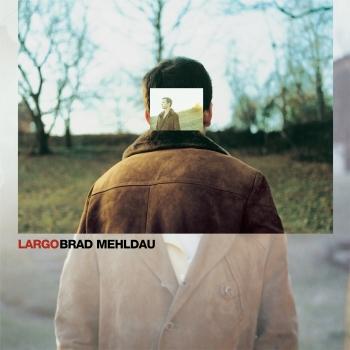
Grammy Award winning jazz pianist Brad Mehldau has recorded and performed extensively since the early 1990s. Mehldau’s most consistent output over the years has taken place in the trio format. Starting in 1996, his group released a series of five records on Warner Bros. entitled The Art of the Trio (recently re-packaged and re-released as a 5-Disc box set by Nonesuch in late 2011). During that same period, Mehldau also released a solo piano recording entitled Elegiac Cycle, and a record called Places that included both solo piano and trio songs. Elegiac Cycle and Places might be called “concept” albums made up exclusively of original material with central themes that hover over the compositions. Other Mehldau recordings include Largo, a collaborative effort with the innovative musician and producer Jon Brion, and Anything Goes—a trio outing with bassist Larry Grenadier and drummer Jorge Rossy.
His first record for Nonesuch, Brad Mehldau Live in Tokyo, was released in September 2004. After ten rewarding years with Rossy playing in Mehldau’s regular trio, drummer Jeff Ballard joined the band in 2005. The label released its first album from the Brad Mehldau Trio—Day is Done—on September 27, 2005. An exciting double live trio recording entitled Brad Mehldau Trio Live was released on March 25th, 2008 (Nonesuch). On March 16, 2010, Nonesuch released a double-disc of original work entitled Highway Rider, the highly anticipated follow up to Largo. The album was Mehldau’s second collaboration with renowned producer Jon Brion and featured performances by Mehldau’s trio—drummer Jeff Ballard and bassist Larry Grenadier—as well as percussionist Matt Chamberlain, saxophonist Joshua Redman, and a chamber orchestra led by Dan Coleman. In 2011 Nonesuch released Live in Marciac—a two CD release with a companion DVD of the 2006 performance, and Modern Music, a collaboration between pianists Brad Mehldau and Kevin Hays and composer/arranger Patrick Zimmerli.
In 2012 Nonesuch released an album of original songs from the Brad Mehldau Trio—Ode—the first from the trio since 2008’s live Village Vanguard disc and the first studio trio recording since 2005’s Day is Done. Ode went on to garner a Grammy nomination. Nonesuch released the Brad Mehldau Trio’s Where Do You Start, a companion disc to the critically acclaimed Ode, in the fall of 2012. Whereas Ode featured 11 songs composed by Mehldau, Where Do You Start was comprised of interpretations of 10 tunes by other composers, along with one Mehldau original. In 2013, Mehldau produced and performed on Walking Shadows, the acclaimed Nonesuch release from Joshua Redman. 2013 also saw a number of collaborative tours including a duo tour with mandolin virtuoso Chris Thile, piano duets with Kevin Hays and a new electric project with prodigious drummer Mark Guiliana entitled “Mehliana.” Mehliana: Taming the Dragon, the debut release by Mehliana, was released in early 2014. Mehldau’s monumental and ambitious 10 Years Solo Live eight-LP vinyl box set was released to unanimous critical acclaim on October 16th, 2015 (with CD and digital versions released in November). The set was culled from 19 live recordings made over a decade of the pianist’s European solo concerts and was divided into four thematic subsets of four sides each: Dark/Light, The Concert, Intermezzo/Rückblick, and E Minor/E Major.
In 2016, Nonesuch Records released the Brad Mehldau Trio’s Blues and Ballads—the ensemble’s first new release since 2012’s Where Do You Start—and the celebrated debut album of the Joshua Redman/Brad Mehldau Duo, Nearness, featuring recordings from their 2011 European tour. Both albums have received universal praise from critics and audiences alike, and both earned a Grammy nomination for Mehldau. After several years of performing live, labelmates Mandolinist/singer Chris Thile and Mehldau released their debut: Chris Thile & Brad Mehldau. In 2018, Nonesuch Records released both After Bach, an album that paired improvisations on Bach and Mehldau’s previously commissioned solo piece Three Pieces After Bach, and the highly anticipated Brad Mehldau Trio studio recording Seymour Reads the Constitution! 2019 saw the release of the critically and commercially acclaimed conceptual recording Finding Gabriel – an album of harmonically rich vocal layers paired with strings, synthesizers, rock drums, and improvisation - featuring a number of high profile guests including Ambrose Akinmusire, Kurt Elling, Becca Stevens, Gabe Kehane, and Mark Guiliana among others. The release won Mehldau his first Grammy Award for Best Instrumental Jazz Album.
Mehldau’s musical personality forms a dichotomy. He is first and foremost an improviser, and greatly cherishes the surprise and wonder that can occur from a spontaneous musical idea that is expressed directly, in real time. But he also has a deep fascination for the formal architecture of music, and it informs everything he plays. In his most inspired playing, the actual structure of his musical thought serves as an expressive device. As he plays, he listens to how ideas unwind, and the order in which they reveal themselves. Each tune has a strongly felt narrative arch, whether it expresses itself in a beginning, an end, or something left intentionally open-ended. The two sides of Mehldau’s personality—the improviser and the formalist—play off each other, and the effect is often something like controlled chaos.
Mehldau has performed around the world at a steady pace since the mid-1990s, with his trio and as a solo pianist. His performances convey a wide range of expression. There is often an intellectual rigor to the continuous process of abstraction that may take place on a given tune, and a certain density of information. That could be followed by a stripped down, emotionally direct ballad. Mehldau favors juxtaposing extremes. He has attracted a sizeable following over the years, one that has grown to expect a singular, intense experience in his performance.
In addition to his trio and solo projects, Mehldau has worked with a number of great jazz musicians, including a rewarding gig with saxophonist Joshua Redman’s band for two years, recordings and concerts with Pat Metheny, Charlie Haden and Lee Konitz, and recording as a sideman with the likes of Michael Brecker, Wayne Shorter, John Scofield, and Charles Lloyd. For more than a decade, he has collaborated with several musicians and peers whom he respects greatly, including the guitarists Peter Bernstein and Kurt Rosenwinkel and tenor saxophonist Mark Turner. Mehldau also has played on a number of recordings outside of the jazz idiom, like Willie Nelson’s Teatro and singer-songwriter Joe Henry’s Scar. His music has appeared in several movies, including Stanley Kubrick’s Eyes Wide Shut and Wim Wender’s Million Dollar Hotel. He also composed an original soundtrack for the French film, Ma Femme Est Une Actrice. Mehldau composed two new works commissioned by Carnegie Hall for voice and piano, The Blue Estuaries and The Book of Hours: Love Poems to God, which were performed in the spring of 2005 with the acclaimed classical soprano, Renee Fleming. These songs were recorded with Fleming and released in 2006 on the Love Sublime record; simultaneously, Nonesuch released an album of Mehldau’s jazz compositions for trio entitled House on Hill. A 2008 Carnegie Hall commission for a cycle of seven love songs for Swedish mezzo-soprano Anne Sofie von Otter premiered in 2010. Love Songs, a double album that paired the newly commissioned song cycle, with a selection of French, American, English, and Swedish songs that Mehldau and von Otter performed together, was released in late 2010 (on the Naïve label) to unanimous praise.
In 2013, Mehldau premiered and performed Variations on a Melancholy Theme a large format orchestral piece which was performed with both Orpheus Chamber Orchestra and Britten Sinfonia. Commissioned by Carnegie Hall, The Royal Conservatory of Music, The National Concert Hall, and Wigmore Hall with the support of Andre Hoffmann (president of the Fondation Hoffmann) in 2015, Mehldau’s Three Pieces After Bach were inspired by selections from Johann Sebastian Bach’s seminal work, The Well-Tempered Clavier. In 2018, Mehldau premiered his Piano Concerto at the Philharmonie de Paris, commissioned by L'Orchestre national d'Île-de-France and Festival Jazz à la Villette Paris, L’Auditori de Barcelona, National Forum of Music, Wroclaw, Poland (Jazztopad Festival), The Barbican Centre London and Britten Sinfonia, and Philharmonie Luxembourg and Orchestre Philharmonique du Luxembourg, and the Los Angeles Philharmonic Association, Gustavo Dudamel Artistic Director. In 2019, Mehldau premiered his song cycle, The Folly of Desire, with tenor Ian Bostridge. The work was commissioned by Elbphilharmonie Hamburg, Wigmore Hall, Stanford Live at Stanford University, and Carnegie Hall.
Mehldau was appointed as curator of an annual four-concert jazz series at London's prestigious Wigmore Hall during its 2009-10 and 2010-11 seasons, with Mehldau appearing in at least two of the four annual concerts. In late January 2010 Carnegie Hall announced the 2010-11 season-long residency by Mehldau as holder of the Richard and Barbara Debs Composer’s Chair at Carnegie Hall—the first jazz artist to hold this position since it was established in 1995. Previous holders include Louis Andriessen (2009–2010), Elliott Carter (2008–2009), and John Adams (2003–2007).
This album contains no booklet.