



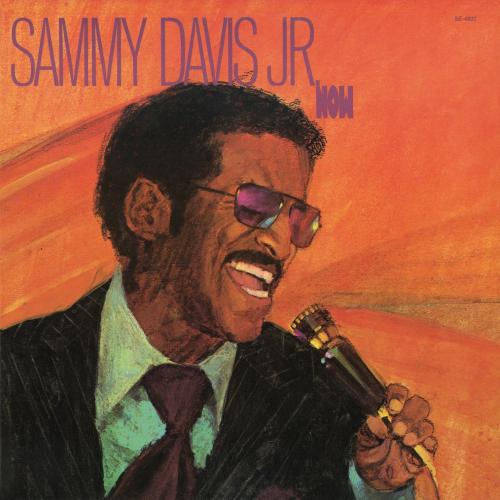
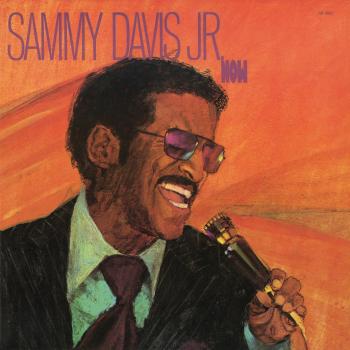
Now (Remastered) Sammy Davis Jr.
Album Info
Album Veröffentlichung:
1972
HRA-Veröffentlichung:
12.12.2025
Das Album enthält Albumcover
Entschuldigen Sie bitte!
Sehr geehrter HIGHRESAUDIO Besucher,
leider kann das Album zurzeit aufgrund von Länder- und Lizenzbeschränkungen nicht gekauft werden oder uns liegt der offizielle Veröffentlichungstermin für Ihr Land noch nicht vor. Wir aktualisieren unsere Veröffentlichungstermine ein- bis zweimal die Woche. Bitte schauen Sie ab und zu mal wieder rein.
Wir empfehlen Ihnen das Album auf Ihre Merkliste zu setzen.
Wir bedanken uns für Ihr Verständnis und Ihre Geduld.
Ihr, HIGHRESAUDIO
- 1 The Candy Man (Remastered) 03:08
- 2 This Is My Life (Remastered) 03:34
- 3 I Am Over 25 - But You Can Trust Me (Remastered) 03:02
- 4 Have A Little Talk With Myself (Remastered) 03:26
- 5 Willoughby Grove (Remastered) 03:58
- 6 Take My Hand (Remastered) 04:20
- 7 I'll Begin Again (Remastered) 02:35
- 8 I Want To Be Happy (Remastered) 02:47
- 9 Macarthur Park (Remastered) 07:20
- 10 Time To Ride (Remastered) 02:28
- 11 John Shaft (Remastered) 03:59
Info zu Now (Remastered)
Sammy Davis Jr. Now is a 1972 album by Sammy Davis Jr. The album features the number one hit "The Candy Man", a Grammy-nominated song. The rest of the album is made up of standards, big ballads and soul tracks.
In 1971, Sammy Davis, Jr.’s recording career was at a crossroads. He had released an album with Motown records which was a commercial disaster, and his manager Sy Marsh had cleverly managed to extricate Sammy from the Motown contract. But where to now? Sammy landed at MGM Records under the eye of record label wunderkind Mike Curb, who was in the midst of successfully transforming The Osmonds from a variety show curiosity into a bona fide pop band. Curb had recently made waves in the industry with his stern anti-drug stance.
For more details on Sammy signing and recording with MGM, please see the page on this website dedicated to an account of Sammy’s overall recording career.
Sammy’s first MGM session was held on 19th August 1971. Sammy recorded two songs written by Mack David and Mike Curb himself: “I Am Over 25 (But You Can Trust Me)”, a reaction to the youth culture revolution, and “Time To Ride”, which had just been released on Donny Osmond’s eponymous debut album. In addition, Mike Curb wanted Sammy to lay vocals over a track that he had already recorded with his own musical group of young singers, The Mike Curb Congregation. The song? “The Candy Man”.
Sammy was appalled at the thought. He recalled his reaction in his second autobiography Why Me?: “I’ve heard the song. It’s horrible. It’s a timmy-two-shoes, it’s white bread, cutems, there’s no romance. Blechhh! Get outta here. Can you imagine me, a swinger, a cat that’s done everything ninety-two times around the pike, and I’m going to sing to kids? Like I’m Julie Andrews? Who’s gonna buy this? It’s stupid. Blechhhh, blechhhh, blechhhh!”
The song was from the movie Willy Wonka And The Chocolate Factory (which had been released in theatres only a couple of weeks earlier), and it had been written by Sammy’s favourite composers, Leslie Bricusse and Anthony Newley. This latter fact may have been the reason Sammy swallowed his pride and cut the track. Mike Curb was delighted with what he had in the can. At the conclusion of the session, Sammy told Sy Marsh: “This record is going straight into the toilet. Not just around the rim, but into the bowl, and it may just pull my whole career down with it.”
Instead, the total reverse occurred. “The Candy Man” became the most successful single of Sammy’s career. After debuting on the Billboard charts on 11th March 1972, the single remained there for over five months, peaking at #1 on 10th June (where it remained for three weeks). “The Candy Man”, was certified Gold and would stay with Sammy as a signature tune for the rest of his career. It is difficult to pinpoint an explanation for the song capturing the zeitgeist so completely (although the later suggestion that the lyrics intentionally referred to drugs would have shocked Curb, and probably would have been news to Bricusse and Newley).
MGM had a massive hit record on their hands, around which they could market Sammy’s first full album release on the label. Sammy had recorded three more cuts for MGM – Jimmy Webb’s “MacArthur Park”, “This Is My Life” (based on an Italian song which had recently become an anthem for Shirley Bassey) and “Take My Hand”, which were all included on the new LP – titled Now.
MGM also included four titles that Sammy had brought with him as part of his departure from Motown, all of which had been produced by Sammy’s Reprise producer, Jimmy Bowen. These were: “I Want To Be Happy” (a brass-heavy funkified update to the 1925 standard), “Have A Little Talk With Myself” (a cover of a Ray Stevens number which had briefly appeared on the country charts in 1970), “Willoughby Grove” (a little-known and mildly mawkish reflection on nostalgia and industrialisation) and “I’ll Begin Again”, from the 1970 film Scrooge.
Finally, to provide the requisite street-cred Sammy was no doubt seeking, MGM included Sammy’s recording of the “Theme From Shaft”. Mike Curb had created a new venture between MGM and Stax Records in order to do the music for MGM’s blaxploitation film Shaft, and Stax’s Isaac Hayes had been selected to write the score. The title theme won the Academy Award for Best Song in 1972, and Hayes became the first African American to win any Oscar in a non-acting category (in a year in which Sammy became the first African American to host the Academy Awards).
Curb brought in Hayes and the original arranger Onzie Horne to personally produce Sammy’s version, now titled “John Shaft”, and extended lyrics were provided by Stax’s long-time writer Bettye Crutcher (some lyrics beginning with the word ‘motha-’ were removed). Like the original, Hayes and Horne’s arrangement for Sammy is a fascinating melding of pop, soul, jazz and disco, featuring plenty of over-the-top electric guitar. Despite Sammy’s unconvincing seventies street-lingo affectations (which doubtless landed the recording on Golden Throats 2: More Celebrity Rock Oddities), it’s a great way to close the album.
Following multi-million dollars losses under its previous directors in 1968-69, Mike Curb’s strategy with MGM Records was to steer it toward ‘middle of the road’ music (MOR). The success of “The Candy Man” helped propel Now up the Billboard album charts. “The Candy Man” was aggressively marketed as ‘The M.O.R. smash’ and Now was given a glorious gatefold fold-out LP cover (‘It’s an album, it’s a poster, it’s a hit!’ screamed the marketing copy). It all worked a charm: Now was on the Billboard 200 for 26 weeks, peaking at #11, becoming Sammy’s most successful album since 1955.
Sammy Davis Jr.
Digitally remastered
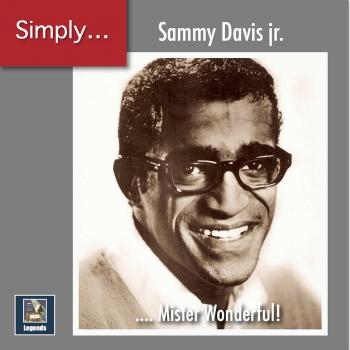
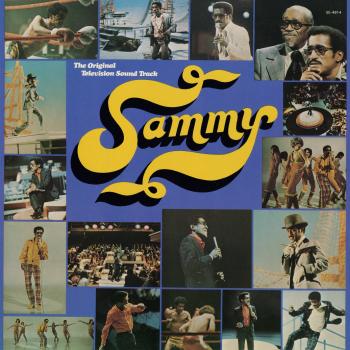
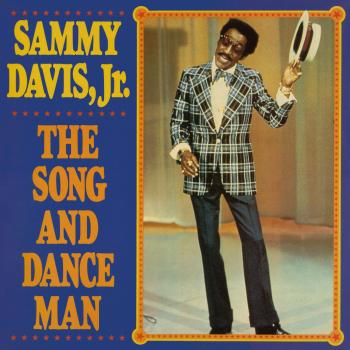
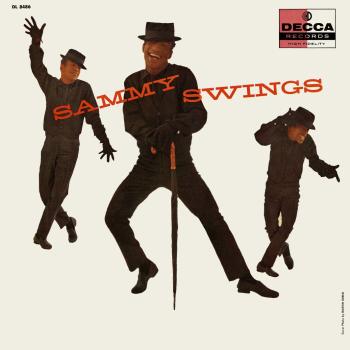
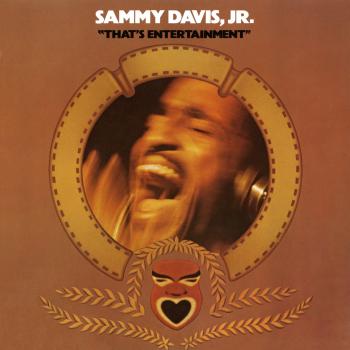
Sammy Davis Jr.
lived from 1925 to 1990. Michael Heatley from Vox magazine gives a short biography.
In the over hyped world of popular music music, there are legends, and then there are Legends with a capital L. There’s no doubting which category Sammy Davis Jr falls into.
For a staggering 60 years, from his debut as a four year old child star in the late 1920’s to his untimely death in 1990 at the age of 64, he more than justified his title of ‘Mr Entertainment’ and when he wasn’t inspiring headlines on stage he was making news of it, as a founder member of the Rat Pack with fellow superstars Frank Sinatra and Dean Martin.
It’s impossible in the space allotted to do more than scratch the surface of one of showbiz’s all time greats. Thankfully, Sammy Davis Jr left no fewer than three detailed accounts of life at the top. ‘Yes I Can’ (1965) and ‘Life In A Suitcase’ (1980) were followed by ‘Why Me’, published the year before his death. All are required reading.
He owed his early start to his parents, vaudeville star Sammy Davis Sr and Puerto Rican ‘Baby Sanchez, who performed with the youngsters adopted uncle, Will Mastin, in his act ‘Holiday In Dixieland’. But Sammy Jr soon became the star of the show as the newly rechristened ‘Will Mastin’s Gang, Featuring Little Sammy’ acknowledged. When the authorities forbade him to appear, so legend has it his father shrugged his shoulders, gave his son a rubber cigar and billed him as a ‘dancing midget’.
Being a star has made it possible for me to get insulted in places where the average Negro could never hope to go and get insulted.
Whatever the truth, Sammy Davis jr’s career was off to a flying start. He made his film debut in the 1932 short Rufus Jones For President, showing off the tap dancing skills taught by the legendary Bill ‘Bojangles’ Robinson. War service first brought Davis face to face with racial prejudice (‘In show business we had our own protective system’, he later remarked), but he survived to resume his career with the Will Mastin Trio (completed by his father), and while touring with Mickey Rooney in the late forties played a three week Manhattan residency with bill topper Frank Sinatra. It was the beginning of a close and lifelong friendship.
During three decades, along all the highways of my youth, Frank had always been there for me.
A near fatal car crash in 1954 en route to Los Angeles recording session saw Davis lose his left eye, but a gruelling rehabilitation schedule left little time for self-pity; he was back on stage within weeks, wisecracking about his newly acquired eye patch. That spell in hospital coincided with a religions conversion to the Jewish faith which, while sincerely held for almost the rest of his life, provided the material for yet more self-mockery of the type that endeared him to an ever growing audience.
Although Davis made his debut in 1956s Mr Wonderful, Broadway would be an occasional, enjoyable distraction from the bulk of his career. He returned in 1964 as boxer Joe Wellington in a musical adaptation of Clifford Odet’s 1937 drama Golden Boy, both shows ran for over 400 performances.
Hollywood opened new doors for all-singing, all dancing Davis, his first notable role being Sportin” Life in a 1959 version of Gershwins Porgy And Bess. If anything, he suffered through his notoriety, despite his undoubted ability, people found it difficult to accept him in character roles like the embittered jazz musician in 1966’s A Man Called Adam. More successful perhaps were Rat Pack movies like Salt And Pepper (1968) and One More Time (1970) in which he simply played himself, while a brace of Cannonball Run films in the eighties afforded screen reunions with Dean Martin and others. Then in 1988, just two years before his death, he showed he could still dance by partnering Gregory Hines in the evocative Tap.
bio_photo2While Davis’s success broke down racial barriers, there were inevitably cries of “sellout” notably when he endorsed Republican President Richard Nixon in 1972. (Even James Brown confided ‘You’re taking a lot of heat…I never got it this way’). Yet every black performer all the way to nineties superstars Michael Jackson and Eddie Murphy (whose TV production company funded Davis’s last movie role in The Kid Who Loved Christmas) owe him a vote of thanks for his ground braking work both on and off camera.
‘Long before there was a civil rights movement’, he remarked in 1989, I was marching through the lobby of the Waldorf Astoria, of the Sands, the Fountainbleau, to a table at the Copa. I’d marched alone’. But it was his attitude to performance that broke barriers. Jolson had got the ball rolling, but too many taboos remained.’Dad said to me “You can’t do impersonations of a white person,” he once commented. ‘He really believed that’. Davis’s philosophy was a simple one. ‘Just do what you’re best at, he said in 1988, ‘and when you can’t do it any longer – stop’.
Sadly, the cancer that ended his life on 16th May 1990 made that decision for him, but he’d long since sung and danced his way into immortality. A final world tour in 1988/89 with Sinatra and Martin will long be remembered, even though Liza Minnelli had to take Dean’s place when ill health forced him to drop out. But Davis sang and danced on. ‘Sammy knew he was dying back then,’ Sinatra later revealed, ‘but you never expect it to come to that. We all think we’ll live forever.’
Sadly, of course, that doesn’t happen, but the magic of the music remains.
Three times married, Davis beat alcohol abuse, physical infirmity and the color bar and admitted he’d thrown away four fortunes gambling in Vegas and living the good life. Yet the musical legacy he left is priceless, and one that will surely endure for all time.
Dieses Album enthält kein Booklet